

In its ongoing fight against online fraud, WhatsApp today unveiled a suite of new tools and insights designed to help users recognize and avoid scam attempts within private and group chats.
These features complement the platform’s recent takedown of more than 6.8 million scam-linked accounts and provide timely warnings to users encountering unknown contacts or suspicious group invitations.
Over the first half of 2025, WhatsApp’s security teams detected and banned more than 6.8 million accounts tied to organized scam centers—many of which operate through forced labor networks across Southeast Asia.
By identifying accounts before they could engage victims, WhatsApp prevented countless potential losses and dismantled infrastructure used to distribute fraudulent schemes at scale.
In one recent case traced to a Cambodian scam center, bad actors used ChatGPT to draft initial outreach messages, redirected conversations to Telegram for “task” assignments on TikTok, and ultimately urged victims to make crypto deposits under the guise of fast earnings.
Collaboration between Meta, OpenAI and other industry partners enabled rapid identification and shutdown of this campaign before substantial harm could occur.
New Safety Overviews for Groups and Chats
Investigations revealed that criminal operators often orchestrate simultaneous campaigns across multiple services—cycling targets from SMS or dating apps to WhatsApp, then onward to Telegram, TikTok, ChatGPT–generated chat links and cryptocurrency platforms.
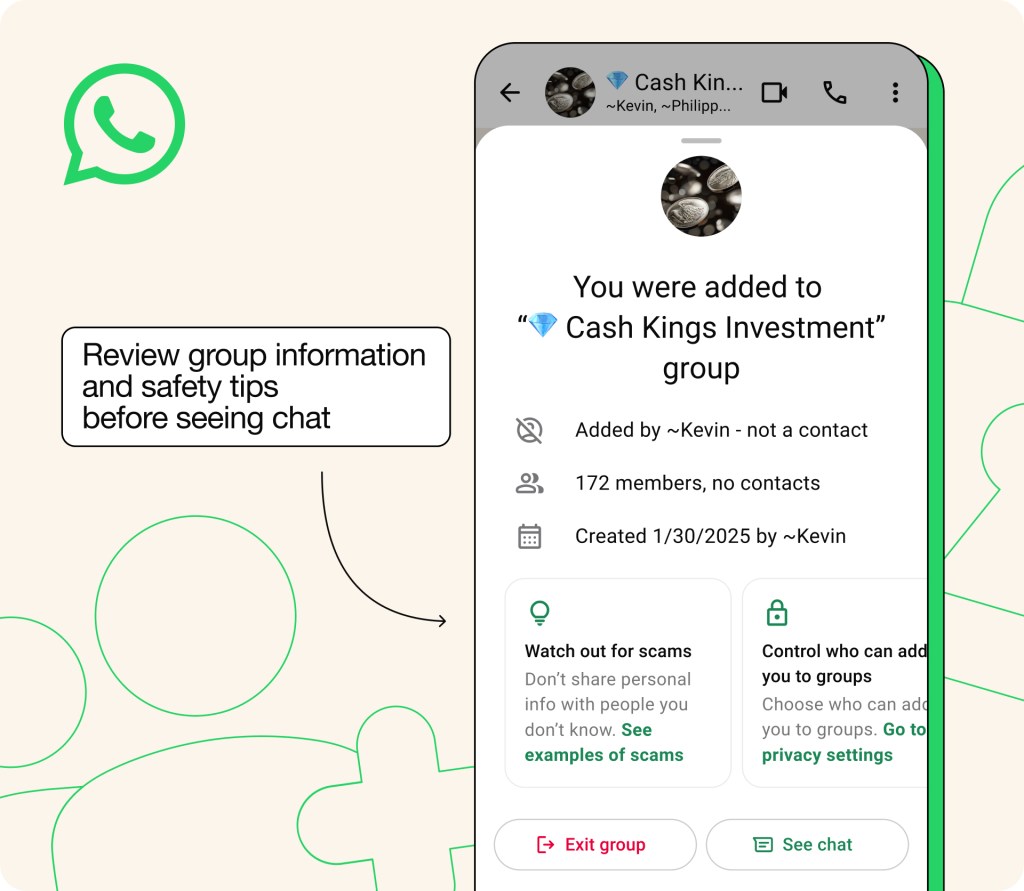
WhatsApp’s latest rollout introduces two key warnings aimed at curbing scams in both group and individual messaging contexts:
- Group Safety Overview
When an unknown user adds you to a group, WhatsApp now surfaces a safety overview prior to showing any messages. This pop-up highlights basic details—such as group participant count and creator identity—alongside practical advice for staying safe.
Notifications remain muted until you explicitly choose to view or join the chat, and you can exit immediately without ever seeing the conversation itself. - Contextual Chat Alerts
To counteract tactics where scammers lure users from other platforms into private WhatsApp conversations, a forthcoming feature will flag chats with unknown contacts.
Users may see additional context—such as whether the number has been reported or is new to the service—prompting them to pause, question the legitimacy of the outreach, and verify the sender’s identity before engaging.
Expert-Backed Tips: Pause, Question, Verify
Beyond technical safeguards, WhatsApp has partnered with internet safety expert and ethical hacker Rachel Tobac to arm users with behavioral strategies.
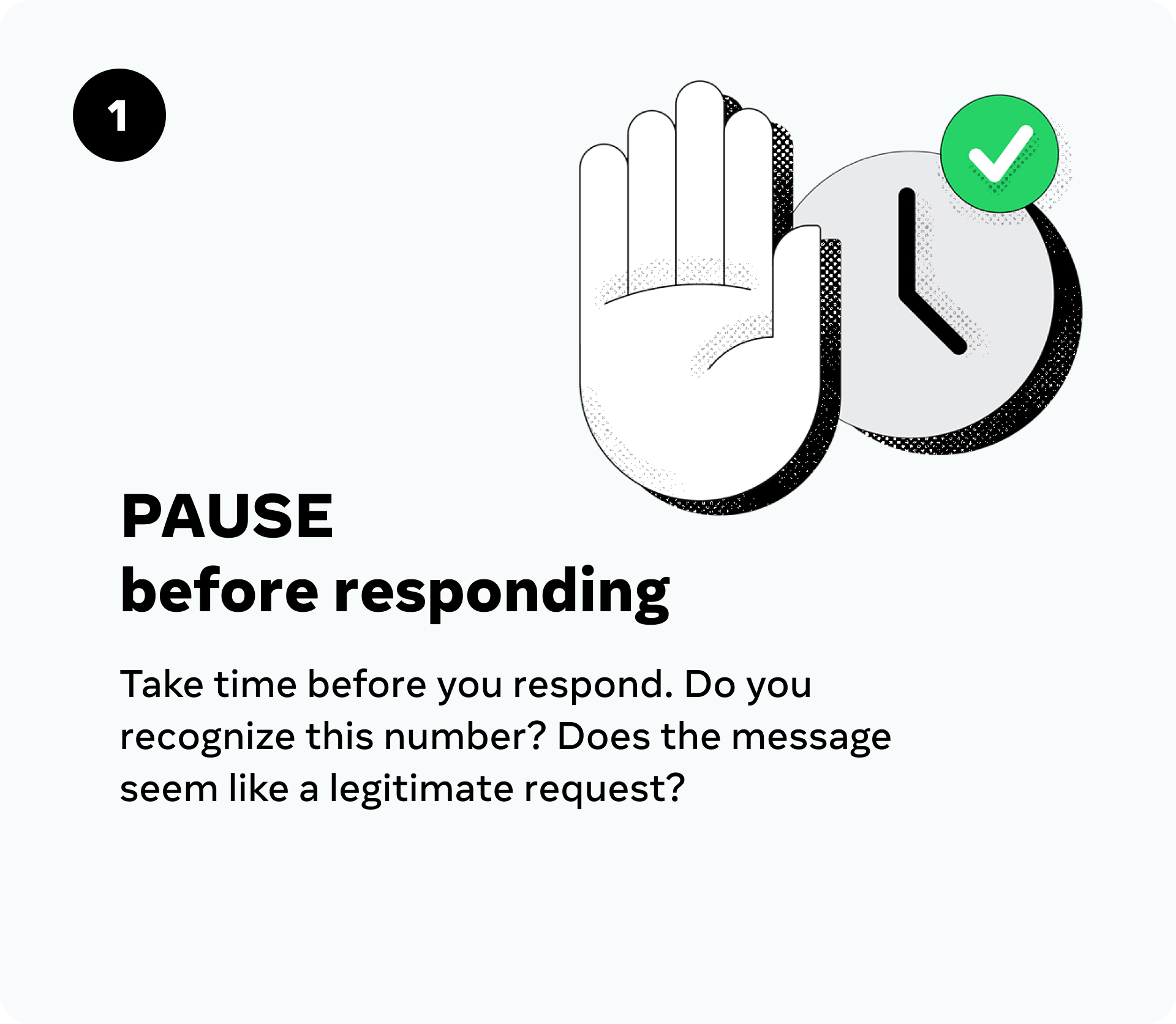
Scammers typically prey on emotion—baiting targets with promises of high returns, urgent penalties for unpaid bills or pleas for help. To avoid falling victim, Tobac and WhatsApp recommend a simple three-step approach:
- Pause: Resist the impulse to reply immediately, especially if the message promises “too good to be true” outcomes or invokes fear of fines and penalties.
- Question: Scrutinize the context. Is the sender in your contacts? Does the offer require upfront payment or personal data? Legitimate organizations do not demand immediate crypto transfers or secrecy.
- Verify: Independently confirm any claims. If someone purports to represent a company, search for official contact details rather than relying on links or instructions in the message. When in doubt, discuss with friends or family and consult trusted online safety resources.
By combining proactive account enforcement, cross-service intelligence sharing and user-facing warnings, WhatsApp aims to neutralize scams before they take hold.
As scammers continuously evolve tactics, these layered defenses and user education tools equip the global community to stay one step ahead—ensuring that every message pause becomes an opportunity to question and verify, rather than fall prey to fraud.
Find this Story Interesting! Follow us on LinkedIn and X to Get More Instant Updates.

.webp?w=356&resize=356,220&ssl=1 "Microsoft Teams Blocking Users from Accessing Embedded Office Documents")


