

Apple’s newly announced Containerization framework, introduced at WWDC 2025, represents a significant advancement for cybersecurity professionals and developers working on macOS systems.
This open-source Swift framework enables native Linux container execution through lightweight virtual machines, offering seamless integration with popular penetration testing distributions like Kali Linux.
The technology provides enhanced security through per-container isolation while maintaining sub-second startup times, positioning Apple to compete directly with Microsoft’s WSL2 approach to cross-platform development environments.
Apple’s Containerization framework introduces a sophisticated approach to running Linux containers on macOS that fundamentally differs from traditional virtualization solutions.
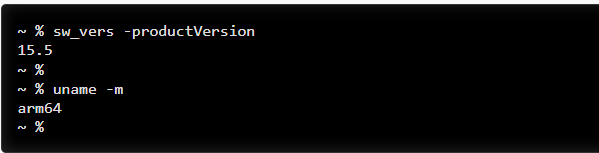
Unlike conventional methods that rely on large virtual machines hosting multiple containers, Containerization creates individual lightweight virtual machines for each container, ensuring complete isolation while maintaining performance.
The framework leverages macOS’s Virtualization.framework and Hypervisor.framework to provide each container with its own dedicated IP address, eliminating the need for complex port mapping configurations.
The technical implementation centers around a minimal init system called vminitd, built entirely in Swift and compiled as a static Linux executable using Swift’s Static Linux SDK.
This approach significantly reduces the attack surface by eliminating traditional Linux dependencies such as core utilities, dynamic libraries, and libc implementations typically found in container environments.
The framework’s security-first design ensures that processes running in one container cannot view or inspect processes in other containers or on the host system, providing enterprise-grade isolation.
Apple’s New Containerization Feature
The Container CLI tool, which serves as the primary interface for Containerization, can be installed seamlessly through Homebrew or direct download from Apple’s GitHub repository.
The installation process includes automatic setup of necessary system services and kernel components, with the framework supporting Open Container Initiative (OCI) compliant images, making existing Kali Linux container images immediately compatible.
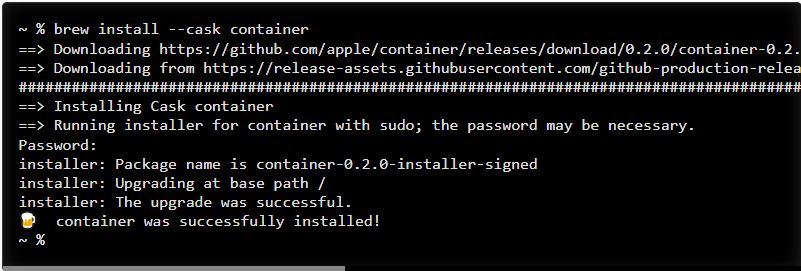
Users can begin running Kali Linux containers with familiar Docker-like commands such as container run --rm -i -t kalilinux/kali-rolling, providing an intuitive transition for professionals already experienced with containerization technologies.
The setup process includes automatic configuration of networking services that allocate IP addresses to containers and handle DNS requests, while storage services manage image distribution and local filesystem integration.
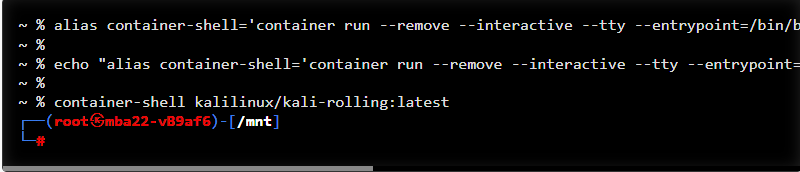
For enhanced productivity, users can create custom aliases to streamline container deployment, with features like directory mounting and workspace integration supporting complex penetration testing workflows that require persistent file access across host and container environments.
Cross-Platform Development
The integration of Kali Linux with Apple’s Containerization framework addressed a longstanding challenge for cybersecurity professionals who prefer macOS for daily computing but require Linux-based security tools for professional work.
This development supports Kali Linux’s “Kali Everywhere” initiative, expanding the accessibility of penetration testing tools across diverse computing platforms.
The framework’s performance characteristics, including sub-second container startup times and dedicated network stacks, enable rapid deployment of testing environments without the overhead associated with traditional virtual machine solutions.
Apple’s Containerization framework represents a strategic advancement in cross-platform development capabilities, particularly benefiting cybersecurity professionals who require seamless access to Linux-based tools.
The framework’s emphasis on security, privacy, and performance, combined with its open-source nature and Swift implementation, positions it as a compelling alternative to existing containerization solutions, potentially reshaping how developers and security professionals approach cross-platform workflows on macOS systems.
Find this Story Interesting! Follow us on LinkedIn and X to Get More Instant Updates.

.webp?w=356&resize=356,220&ssl=1 "Microsoft Teams Blocking Users from Accessing Embedded Office Documents")


